Showing posts with label Dr. Brian Goldman. Show all posts

Saturday, 30 December 2023

Why 2024 Will Be the Year of the Caregiver

My New Year's resolution is to work hard at the Canadian Centre for Caregiving Excellence to get a national strategy for caregivers - ALL caregivers, patients and families. 

The third day of the November Canadian Caregiving Summit was all about how we can achieve real change here and worldwide for you, me and the millions of caregivers who need help now. We wanted to know what had been achieved in other countries and how they did it. 

First off, we heard from Allison Barkoff, acting Assistant Secretary for Aging and Principal Deputy Administrator, Administration for Community Living at U.S. Department of Health and Human Services. She declared that her mission was to ensure every person can live and participate in their community, regardless of age or ability. Not just people with Alzheimer's or childhood disability, EVERYONE. Caregivers included. Allison described a framework for thinking about care infrastructure: that supporting it is a matter of civil and human rights. And that care infrastructure consists of paid care AND families. We cannot support one without the other and expect positive change. A key aspect of the federal "wins" for caregivers that Allison described was in combining issues of aging with disability. Another key element was political will. An executive order by President Joe Biden created the opportunity for a big tent movement culminating in the RAISE Family Caregivers Act. "We must make the business case to support caregivers", Ms. Barkoff said, "and then we must act with radical incrementalism." In other words, be visionary, determined, collaborative, strategic and know that small steps on a single path can lead to new territory. 

Greg Link of the US Department for Community Living (Director, Caregiver Support) told us that the RAISE Act includes a list of nearly 350 actions that 15 federal agencies agreed to take. He urged us to adopt a similar big tent approach and then seek elected officials to enact a national strategy. He said, "have a policy that's big enough that any group that looks at it can think, "there's something here for us."" It's a whole society approach. 

Next, an international panel of caregiver leaders from the USA, UK, Ireland and Brazil compared and contrasted barriers and facilitators for engineering supportive change in their respective countries. One UK example has stayed with me: The Care Act states that caregivers are equal to patients and thus should have equal support from health and social systems. Dr. Nikki Dunne from Family Carers Ireland told us how her organization successfully lobbied to pay family caregivers

In keeping with the idea that care provider wellbeing is intertwined with family caregiver wellbeing, I was keen to listen to a panel on just that subject. A number of front line caregivers told us how they felt invisible and under-valued. Their stories of commitment to caring in the face of racism and apathy brought me to tears. 

But we need our elected officials to put skin in the game. We heard from Members of Parliament representing each of the major political parties in Canada. This isn't just talk - we need our tax dollars to support families because caregivers are in crisis. Thankfully, our message was well received. 

We heard about policy innovations in Canada and how we leveraged terrible pandemic lock-down challenges to achieve the broad acceptance of "essential family caregiver" in hospitals and long term care homes. 

Next, Dr. Brian Goldman interviewed Baroness Jill Pitkeathley, founder of Carers UK and "mother of the caregiving movement" worldwide. It was truly inspiring to hear the sum of her accomplishments over a lifetime of care advocacy. She challenged us, "You can do the same!" 


Finally, it was time to chat amongst ourselves and set policy priorities for caregiver support in Canada. The discussion was passionate and we could tell that change is coming. We ARE a movement and together, we are stronger. I will always remember the words of Allison Barkoff, "Big groups speak with louder voices." Well, it's time to be heard. I call for a National Caregiver Strategy in 2024 and I hope you'll raise your voice with mine.

Happy New Year, everyone!

Tuesday, 22 November 2022

All Together Now! The Power of Teamwork in Caregiving


I actually published this post a few months ago but I want to reprise it because (pause for happy dance), I am hosting Dr. Brian Goldman on our next Caregiving Essentials webinar to talk about teamwork in caregiving! Join us for what promises to be a rich, rich discussion about how to effectively create and collaborate on care teams at home and in institutional settings. Free but you have to register to get the link - click HERE! 

Today I finished reading The Power of Teamwork: How We Can All Work Better Together by Dr. Brian Goldman and I had to share my excitement about it right away. There are SO many lessons here for family caregivers and the circles of care that we manage. I've written about Dr. Goldman before, notably in a review I penned of his excellent The Power of Kindness back in 2018. Dr. Goldman is an ER doctor in Toronto, and he is a compelling storyteller. He's the host of the CBC, widely syndicated White Coat/Black Art show as well as the podcast, The Dose. When Dr. Brian Goldman talks, I listen and learn.

So let me tell you what I learned about caregiving and leadership from The Power of Teamwork. I learned that groups are not the same as teams (we KNOW this but seeing the words in print made me stop and reflect on all the times I've been frustrated in "team meetings" for my son or my Mom and now I understand that it was because people at the table were actually in groups - groups that excluded me). I learned the term "flattened hierarchies." I love that! We are all human, we each have a particular role to play in a project of care, a role that is based on our talents, skills and knowledge. And from the team, leaders naturally emerge. And their roles aren't static; they can change, depending the situation. In his book, Goldman tells the story of Dr. Kevin Menes, an ER doc who happened to be working a shift on the night of the worst mass shooting in US history.  Fifty-eight people were killed on October 1, 2017, when Stephen Paddock opened fire on the crowd attending the Route 91 Harvest music festival on the Las Vegas Strip in Nevada. Nearby Sunrise Hospital and Medical Center treated 199 patients in just six hours. Dr. Kevin Menes took charge of operations. He was an exemplary team leader. Rules were broken to meet the needs of the moment, hierarchies were flattened. It is a riveting story of coordinated care in the most horrendous and chaotic circumstances.

Dr. Trevor Jain, a young doctor on the scene of a terrible Swissair plane crash near Halifax in 1998, set up a massive makeshift mortuary and set about identifying the remains of hundreds of deceased passengers. He reflected on his own experience and that of Dr. Menes, "If you let people do what they're trained to do, and grow into the role and encourage it, you as a leader, it's just going to make you look outstanding. It's not insecurity. A leader should never be insecure. They (the other team members) are just going to make you look phenomenal."

There are so many lessons for caregivers in The Power of Teamwork. If you feel like your circle of care has "sides" or you just want to be a more effective care team leader, buy this book now! It is wonderful.

Sunday, 10 July 2022

Lessons for Caregivers in a New Book, The Power of Teamwork


Today I finished reading The Power of Teamwork: How We Can All Work Better Together by Dr. Brian Goldman and I had to share my excitement about it right away. There are SO many lessons here for family caregivers and the circles of care that we manage. I've written about Dr. Goldman before, notably in a review I penned of his excellent The Power of Kindness back in 2018. Dr. Goldman is an ER doctor in Toronto, and he is a compelling storyteller. He's the host of the CBC, widely syndicated White Coat/Black Art show as well as the podcast, The Dose. When Dr. Brian Goldman talks, I listen and learn.

So let me tell you what I learned about caregiving and leadership from The Power of Teamwork. I learned that groups are not the same as teams (we KNOW this but seeing the words in print made me stop and reflect on all the times I've been frustrated in "team meetings" for my son or my Mom and now I understand that it was because people at the table were actually in groups - groups that excluded me). I learned the term "flattened hierarchies." I love that! We are all human, we each have a particular role to play in a project of care, a role that is based on our talents, skills and knowledge. And from the team, leaders naturally emerge. And their roles aren't static; they can change, depending the situation. In his book, Goldman tells the story of Dr. Kevin Menes, an ER doc who happened to be working a shift on the night of the worst mass shooting in US history.  Fifty-eight people were killed on October 1, 2017, when Stephen Paddock opened fire on the crowd attending the Route 91 Harvest music festival on the Las Vegas Strip in Nevada. Nearby Sunrise Hospital and Medical Center treated 199 patients in just six hours. Dr. Kevin Menes took charge of operations. He was an exemplary team leader. Rules were broken to meet the needs of the moment, hierarchies were flattened. It is a riveting story of coordinated care in the most horrendous and chaotic circumstances.

Dr. Trevor Jain, a young doctor on the scene of a terrible Swissair plane crash near Halifax in 1998, set up a massive makeshift mortuary and set about identifying the remains of hundreds of deceased passengers. He reflected on his own experience and that of Dr. Menes, "If you let people do what they're trained to do, and grow into the role and encourage it, you as a leader, it's just going to make you look outstanding. It's not insecurity. A leader should never be insecure. They (the other team members) are just going to make you look phenomenal."

So coincidentally, today I was scrolling through my personal facebook page when I saw a post from my friend, fellow complex care Mom and caregiving coach, Brenda Blais-Nesbitt


"Team work makes the dream work!!"
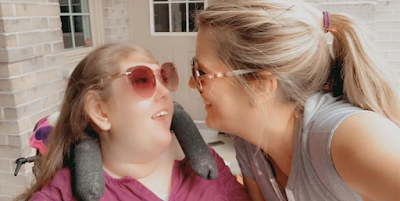
This was so true of Nikki's care in hospital tonight. She had such good days on Wed and Thurs and I really thought she would be going home on Thursday but that hope was vanished for a number of reasons.
I guess the fact that it didn't happen was a blessing in disguise or we may have been right back in the ER as there have been a few glitches. Today was a struggle for her.
But here's the thing. I had a theory about why Nikki was both lethargic and had increased difficulty breathing today. AND I knew how to fix it. At home, I would have just done it. But being in the hospital is a different story. So, I proposed my plan to the nurse ... it involved a medical procedure that I can and have done on a regular daily basis for the past 11-12 years. The nurse had to ask the Resident to order it though, before I could do it. The Resident (who did not know Nikki) did not want me to do it. She wanted to try something else and wait to see if that alternative would solve things by tomorrow for her. That meant Nikki would be incredibly uncomfortable with increased work of breathing throughout the night.
And then Nikki's nurse advocated for me and my idea. She agreed the procedure needed to be done ASAP for Nikki's comfort and to help her BREATHE. She also advocated strongly with the Resident that I be allowed to do it. The nurse explained that I knew Nikki's anatomy better than anyone and that I had significantly more experience doing the procedure than she (the nurse) did (she had done it twice in her 3 year career). I have done the procedure thousands of times and I've also trained all of our home care nurses on it as well.
The Resident consulted with the general surgery team to come up and do it. They gave her their blessing to let me do it. And you know what? I am happy to say that it was the BEST decision ever. By the end of the procedure Nikki was alert, breathing SOOOOO much better and will have a much more comfortable night.
This is what collaboration is all about. Collaborative care and team work literally did make the dream work for Nikki today. For someone as complex as Nikki is, it literally does take a team working together for a common goal - Nikki's comfort, her health, and her safety. Thank you to a very dear friend of mine who recently pointed out to me: Nikki has a circle of care around her, one that I've been very good at allowing others enter to help me care for her. What's not in a circle? SIDES!! There should be no sides in care. It's truly a privilege to be in Nikki's circle and be joined by others who are surrounding us with physical care for Nikki, and love, support, and guidance for both of us through such challenging times. Team work really truly does make Nikki's dream work for her.

There are so many lessons for caregivers in The Power of Teamwork. If you feel like your circle of care has "sides" or you just want to be a more effective care team leader, buy this book now! It is wonderful.

Saturday, 30 June 2018

What The Power of Kindness Means to Caregivers

I read books in different ways. Sometimes I devour a mystery on the beach in a single day. Other times, I savour ideas slowly over time, bit by bit. 

I finished Dr. Brian Goldman's The Power of Kindness a couple of weeks ago, but I've had a long time to mull it over. I'd seen the pre-release notices about the book and was excited to read it. I've always believed that the connection between the theme of kindness and caregiving is a vital topic for anyone who cares about social inclusion and community. So, it was on the evening of April 27th that I settled into a pew at Ottawa's Christ Church Cathedral for Dr. Goldman's Writer's Festival book launch. It was a sold-out event for good reason. We were enthralled, sometimes shocked and at other moments delighted by Dr. Goldman's stories of human kindness discovered the world over. 


What interested me most was the story of what prompted him to write this book. Brian Goldman is an emergency room doctor when he's not hosting his popular CBC radio show, White Coat, Black Art. One evening in his crowded ER, a family arrived. A woman was in the last stages of a degenerative disease and her husband and adult children had brought her to die in hospital when they realized they could not provide adequate comfort care at home. Goldman was stressed that night and was abrupt with the family, perhaps even rude. The woman was admitted and shortly afterwards, she died. Weeks later, a letter appeared on Dr. Goldman's desk. It was from the husband of the woman, asking for a meeting. The family wanted to address Dr. Goldman's behaviour in the ER and they wished to forgive him. Goldman took the meeting, tears were shed and the author's quest began, both to locate the roots of his own (lost) kindness and the nature of some of the world's kindest souls.


Every chapter of The Power of Kindness tells a story of someone whose life and work exemplifies caring and empathy. Like Goldman, I was seeking clues to my own capacity for kindness in each story and because I'm already sure that caring is in my nature, I gravitated to chapters about extraordinary 'empaths - heroes of caring kindness. I learned about Mackin, a New York bartender, who has taken on the role of convening and supporting 9/11 first responders. Mackin understands that bringing together people who have shared a painful, life-changing experience requires stepping back without judgement. If the customers don't want to talk, "You leave them be", he says. "A good bartender orchestrates", Mackin muses. "He makes sure the right people sit next to each other." So, I learn, kindness isn't always about inserting yourself in a social situation. Often, it's about setting a scene and then stepping back.

For me, the most moving stories in The Power of Kindness were about those people who are working face to face with marginalized individuals (as in the case of a Brazilian woman who created an extraordinary friendship with a homeless poet) or Mary Gordon who founded Roots of Empathy, a teaching programme for elementary school children. Gordon's model is simple but powerful. She links new parents living locally with classes of young children. Regular visits of parents and baby demonstrate intimacy, growth, nurturing and natural care. Naomi Feil was another of Goldman's exemplars of kindness and her story is truly inspiring. Feil grew up in a nursing home (her parents worked there) and there, she began to discover ways to communicate with the 'lost souls' of dementia and Alzheimer's. Her approach, called 'validation therapy', is poignantly demonstrated in Goldman's book. It's the chapter that made me cry.

I was mystified but intrigued by the author's decision to include care robots - one of Japan's responses to their national problem of a rapidly aging population, dearth of caregivers and widespread social isolation. I certainly don't want a robot caring for me or anyone I love, but Goldman's description of how some folks perceive human kindness in electronics was interesting, especially because some Japanese Alzheimer's patients apparently become animated in conversation with robots, but not with humans. I wondered about the cultural differences inherent in kindness and also what mysteries of authentic communication with dementia patients can be revealed through robotics.

I recommend The Power of Kindness to anyone who, like me, is fascinated with the topic of empathy especially as it relates to natural care. And a great companion text for me was On Kindness by Adam Phillips and Barbara Taylor - it's an exploration of the history of human kindness and why it's become our guilty pleasure and contemporary taboo. As they say, "Today, kindness is only for those who don't have the guts to be anything else." Where you stand on the subject of kindness, compassion and empathy, these books give us reasons to bring kindness out of the closet as a bona fide virtue - one that we can claim as central to family caregiving. 


Tuesday, 6 February 2018

ALL THE TIMES THAT PROFESSIONALS HAVE BEEN KIND - TISSUE ALERT!


A couple of years ago I met an amazing doctor. I was speaking at the American Academy of Cerebral Palsy and Developmental Medicine conference in Fort Lauderdale and after my remarks, a gentle but insistent man approached me saying, "Hello, my name is Jim Plews-Ogan. I'm a pediatrician specializing in complex care and I am really, really interested in what you said about kindness." These are the words from my speech that drew Dr. Plews-Ogan to me:

"Over the years of Nick's many hospitalizations and clinic appointments, I don’t recall ever once anyone asking me, “What do you believe is happening to your son? How do you feel about your treatment choices? How can we support you now, given Nicholas’ realities?” I do remember saying, “I need you to be kind to me; I really need that.” In my way, I was pleading for a compassionate, honest conversation that would enable us to examine each other’s understanding of where we were as a team with Nicholas’ treatment and where we were likely to go. I wasn’t seeking certainty; I was seeking honesty, reassurance and kindness."

Jim Plews-Ogan teaches the importance of kindness in care to medical students at the University of Virginia and he blogs about his work HERE. Jim and I have kept up a friendship based on our shared interest in how kindness can be manifested to patients and their families in health care.  His work inspired me to ask families on my social media networks this question: What does kindness in health care look like? I asked families to tell me their stories about when medical professionals showed exceptional, personal kindness and how that compassionate care made a difference in their ability to manage very difficult circumstances of illness or disability.  The response was incredible. Within four hours, 57 caregivers had responded. I was in tears reading these moving accounts of extraordinary kindness. 


1. "I remember when my (adult) daughter had been in the hospital for 9 days and I was scared and exhausted. She was taken out of her room for tests and I started to weep: I had held it in for so long not wanting her to see my worry. Her busy busy nurse walked by the room and saw me crying. She came in and silently held me for about five minutes while I cried. So much beyond her call of duty, and so beautiful."

2. "We were visiting the NICU where my girls were born, after receiving the CP diagnosis. One of the neonatologists who had been a part of our journey since my twins' delivery noticed that her shoe was undone so he picked her up, put her on his lap and tied her shoe. It was honestly the cutest and still means so much."


3. "My daughter had some persistent respiratory challenges that kept escalating; and as a result she had a surgery cancelled on multiple occasions because we couldn't get her breathing stabilized. After 6 months of this, I emailed the specialist in desperation on a Saturday night because my daughter was still wheezing significantly and I was going to have to cancel surgery again. Well, he called me back within 1/2 an hour of emailing (from his home), reassured me that we would find a way to make the surgery happen, contacted all her specialists, got a medication plan and reserved an ICU bed...then followed up with me and got her in for a check-up just before surgery to make sure our plan had worked. Which it did... He then danced with my daughter at her follow-up appointment. I will never, ever forget his kindness."


4. "My son was in the ICU for a long time. We developed an amazing relationship with one doctor in particular. On rounds one day she asked the group of residents if they thought my son was retaining water. After a few residents tried to answer, she interjected and said "why don't you ask mom." She respected us and valued our opinion. She used the moment to teach the future generation how to value parents. This to me was real kindness."
   
5. "I have one with my “typically developing” daughter, L. She was about 3 at the time, making J (her complex sister) about 1.5. I had taken L. out for a walk and she fell on the concrete. She landed on her elbow. She immediately started babying it, but I could tell nothing major was happening. Still, she insisted on going to the hospital. Because she had seen how I would drop everything to take J. to the ER, generally because of lung infections/pneumonia. I kept telling L. she was fine. When she wasn’t buying that, I prepared her saying that we’d be at Emerg FOR HOURS. She was still adamant she needed to go. I went to triage and said “Listen. I think my daughter is fine but she sees me drop everything to take her sister to the hospital on almost a bi-weekly basis. I just need someone to prove that I’m willing to do the same for her as I do for her sister. I have told her that we’re going to be here for hours so please make us wait”. The doc overheard what I was doing and took us almost immediately. Checked her elbow and made sure everything was ok and it was just a bruise. Then wrote her a script for 24 hrs of ice cream and cuddle time on the couch. He applauded me for how I handled it and wished other parents would do the same. I said I felt like I was abusing the system. But frankly, L never asked to go to the doc again until she actually broke her arm at the end of grade 2."

6. "My daughters first kiss came from her primary NICU Nurse. As my daughter was born at 25 weeks keeping her free from infection was my top priority I was so afraid to even breathe around my daughter never mind kissing her. I will never forget that exact moment she leaned over and kissed the top of her head. That sweet moment reminded me what the importance of being a Mom was even though it came with risks."


7. "I think that we find little acts of kindness all around us, every day. My youngest makes it so very easy. The IV nurse that danced along with his favourite song (and he still looks forward to seeing him), the child life specialist that walked an important DVD down to us in the ER from the ward, the volunteer that got us TWO mats to play on in our ward room, the nurse that brought me water and cookies because leaving the room to get something to eat was too scary, the birthday banner put on a room door and signed by staff overnight. Not very grand gestures but they make the world of difference."

8. And from the daughter of her elderly mother in hospice: "When an over worked, stressed out hospice nurse was inappropriately cheerful and made some silly comments and carelessly caused some minor pain to my dying mother, I was at the end of my wits and just sobbed at her thoughtlessness. Another nurse, seeing my reaction and sadness, hugged me and comforted me in the moment and then later explained that the hurt the other nurse had caused had not been intentional and explained a bit about that nurse to me. She didn’t excuse her actions but she explained some of that nurse's normally exceptional caring qualities to me without demeaning her fellow caregiver. It really eased and comforted me so that I was able to come away from the whole episode with a different perspective but still acknowledge that my upset was valid and understandable. I was even able to include the problem nurse in my individual thank you’s to all the nurses that had been so good to both my mother and myself at that tremendously heartbreaking time in our lives. The whole experience was truly remarkable."


9. "The male student nurse who gently washed my daughters hair after hip surgery. He was on his break."

These are only a few examples of the many and exceptionally moving examples of kindness in health care that were shared online. From these, I've learned that medical professionals can be kind in their actions and words by: 


  • Acknowledging that family caregivers are experts and care providers
  • Going 'above and beyond' in their efforts to REASSURE and offer HOPE - and they do it OFTEN
  • Allow and enable ACCESS to complex care caregivers via email or phone (believe me, we do not abuse this access - we only contact health care professionals for advice when we REALLY need it) Dr. Plews-Ogan teaches this by example to his students - has been doing house calls for his patients throughout his 30 year career in medicine
  • Offer TOUCH (hand holding, hugs to both caregivers and to our loved ones - see experience #1 above)
  • Offer FOOD (cups of tea, for example)
  • Offer RESPITE (when staff notice that we are exhausted and offer to sit with our loved one so we can get a break)
  • HUMANIZE our loved ones by marking occasions such as birthdays, ceremonies for palliative patients, etc.
  • PALLIATIVE care professionals seem to know best how to deliver care with exceptional kindness. Other disciplines in health can learn from them. 
These are just a few of the ways that health care professionals offer kindness to patients every day. I will be sharing all the responses I've received with Dr. Plews-Ogan. He will share them in turn with his medical students. And I'm thrilled to add that kindness is in the news today with the announcement of an exciting new book The Power of Kindness by Dr. Brian Goldman. Dr. Goldman is an emergency room physician and the host of the wonderful White Coat, Black Art on CBC radio. I never miss an episode. 


Thank you to every doctor, nurse, social worker, personal support worker or therapist who has offered kindness in care to patients. We deeply appreciate it and we are stronger for it.