Showing posts with label Arthur Kleinman. Show all posts

Saturday, 11 November 2023

Caring, Grieving and Remembering When the World's On Fire

Last week I had the privilege of attending the Canadian Centre of Excellence (CCCE) Summit. It was three days of continuously invigorating, challenging and hopeful discussions. I will write more in the coming days about the Summit and what I learned, but today I want to reflect on the meaning of care in times when part of the world is at war. Today is Remembrance Day and the news is full of unimaginable violence and brutality in the Middle East. The CCCE is powered by the Azrieli Foundation and Naomi Azrieli in her opening remarks at the Summit reflected on how we must persevere in caring even when "the world is on fire." This is a post that I wrote on Remembrance Day in 2019 and it seems especially appropriate today. 

 November is a sombre month. The leaves have fallen where I live, and the skies are steely gray. Rain changes to sleet and then back to rain again. Geese cry overhead.

On the streets, most people are wearing poppies. "Lest we forget" is a warning phrase we see in bus stations, on facebook and on veteran sponsored ads on television. I won't forget the sacrifices made by our soldiers, because my Dad was one who fought in Europe during WW11. He was one of the lucky ones - he came back.


My Dad was kind, gentle, quiet and very funny. My sister and I adored him. In 1973, he suffered the first of three strokes and for two years until his death, my Mom, my sister and I cared for him at home.

Recently, I have been thinking a lot about the meaning of care over years - how care changes and how it changes us. Maybe it's the melancholy of November or perhaps it's the messages I see in my news feed about Caregiver Month and Remembrance Day (or Veterans Day as it's called in the US).

Yesterday I listened to an extraordinary podcast interview with Dr. Arthur Kleinman, author of The Illness Narratives and his latest book, The Soul of Care: The Moral Education of a Husband and a Doctor. For ten years, Dr. Kleinman cared for his wife who had Alzheimer's. He also happens to be a medical anthropologist at Harvard. But here's what he said that reminded me of my own life of caring and of my Dad:
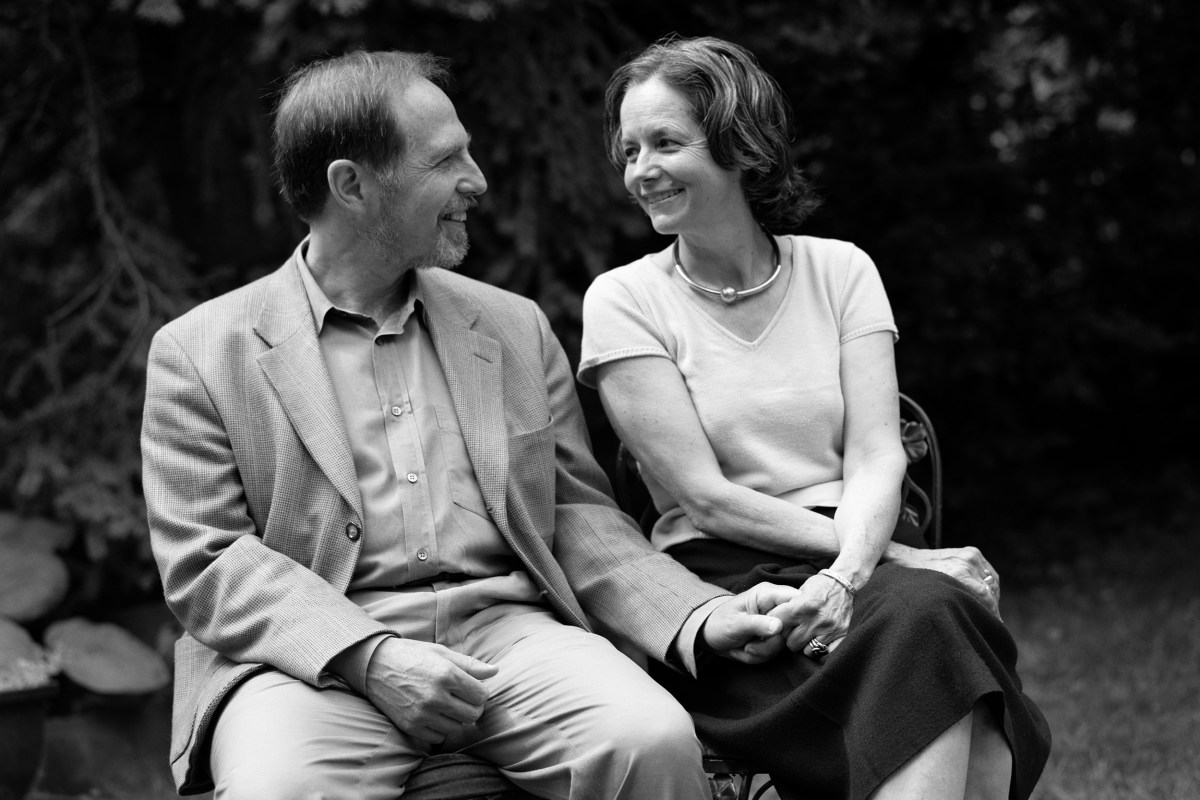
"The real issue about caregiving is that there's no Hollywood ending. So, how do we endure? This is the challenge. We are never sure that we can endure the unendurable. How do we keep going?

Image result for arthur kleinman wife

How many people come to a wall and feel that we can’t get over it but because of love, we get over it. Love and moral commitment. The last part is that care does not end with the death of the person - you care for memories after that. Building a story about one’s life and one’s family. And central to that is memory, memory of the care you gave and what went before… the time we spend developing those stories."

I do remember my Dad and in that way, I continue caring for him. And this month, I salute every other caregiver who is with someone who needs them, finding a way to scale a wall of despair and exhaustion because of love.

Wednesday, 6 November 2019

The Month of November - It's Important for Two Reasons


November is a sombre month. The leaves have fallen where I live, and the skies are steely gray. Rain changes to sleet and then back to rain again. Geese cry overhead.

On the streets, most people are wearing poppies. "Lest we forget" is a warning phrase we see in bus stations, on facebook and on veteran sponsored ads on television. I won't forget the sacrifices made by our soldiers, because my Dad was one who fought in Europe during WW11. He was one of the lucky ones - he came back.

My Dad was kind, gentle, quiet and very funny. My sister and I adored him. In 1973, he suffered the first of three strokes and for two years until his death, my Mom, my sister and I cared for him at home.

Recently, I have been thinking a lot about the meaning of care over years - how care changes and how it changes us. Maybe it's the melancholy of November or perhaps it's the messages I see in my news feed about Caregiver Month and Remembrance Day (or Veterans Day as it's called in the US).

Yesterday I listened to an extraordinary podcast interview with Dr. Arthur Kleinman, author of The Illness Narratives and his latest book, The Soul of Care: The Moral Education of a Husband and a Doctor. For ten years, Dr. Kleinman cared for his wife who had Alzheimer's. He also happens to be a medical anthropologist at Harvard. But here's what he said that reminded me of my own life of caring and of my Dad:

"The real issue about caregiving is that there's no Hollywood ending. So, how do we endure? This is the challenge. We are never sure that we can endure the unendurable. How do we keep going?

Image result for arthur kleinman wife

How many people come to a wall and feel that we can’t get over it but because of love, we get over it. Love and moral commitment. The last part is that care does not end with the death of the person - you care for memories after that. Building a story about one’s life and one’s family. And central to that is memory, memory of the care you gave and what went before… the time we spend developing those stories."

I do remember my Dad and in that way, I continue caring for him. And this month, I salute every other caregiver who is with someone who needs them, finding a way to scale a wall of despair and exhaustion because of love.

Monday, 16 January 2017

What Some Doctors Don't Understand About Us

I've been thinking a lot lately about how we communicate with health care professionals. When our loved ones are very sick, they are usually in the hospital and as we gather information to make important choices, we are forced to navigate the uncharted waters of conversations that are so complicated, they are almost impossible to describe.

Take, for example, this scenario that played out recently with my mother. Mom was hospitalised just prior to Christmas for respiratory distress. A young, bespectacled respirologist strode into the room. He smiled at Mom and began to make notes on his clipboard.  "Have you ever had trouble breathing before?" he asked.  "Once when I was about twelve, I was at camp..." Mom began.  My eye was drawn to the doctor's foot. His polished loafer began to tap rapidly, but his smile remained fixed.

I thought, "he is trying to have a business conversation here. But Mom thinks this is PERSONAL!"  I jumped in and re-directed Mom to her more recent health history.

I found myself wishing that this doctor had been trained by Arthur Kleinman, a wise man of medicine whose work I great admire. Kleinman has offered some thoughts on re-imagining the way in which professionals care for the vulnerable and their families.  He begins by suggesting a major transformation of training for health professionals and proposes a new methodology that is rooted in ‘empathetic listening, translation and interpretation’.  The practical steps in building this new professional training would begin with recording a ‘mini-ethnography’ or life history of the patient and his or her family.  The neurologist treating my son’s first seizure would have discovered in my life history that I had been traumatized as a teenager by witnessing my father having a post- stroke seizure while the two of us were alone at home.  I was almost immobilized by fear when I realized years later that Nicholas might have epilepsy. 


Next, Kleinman proposes ‘the explanatory model followed by negotiation’.  Once a professional understands the lived experience of a person requiring care, he or she can converse with the patient and family to compare understandings of the illness, the treatment options and how to agree on a course of action.  Everyone in the room might answer questions such as “What do you think is wrong?  What caused it?  What do you want me to do?  What do you think will happen if you have this or that treatment?”  Of course, no one is going to take time to build consensus in this manner if there is an emergency situation, but in chronic care, consensus is critical to minimizing regret, frustration or anger over the long term.

Illness IS personal to the patient. Understanding the illness experience will never be achieved by professionals who sever the personal from the conversation in the belief that it isn't relevant to treatment. Seasoned patients and their families have a role to play in training physicians how to take histories and gather information about how illness intersects with emotion in a life story. We need medical schools to provide this training. 

Tuesday, 18 October 2016

When Long-Term Caregivers Tell Their Stories, Outcomes Improve

Arthur Kleinman understands families like mine.  I know he does, because he wrote this:

The chronically ill (and their caregivers) often are like those trapped at a frontier, wandering confused in a poorly known border area, waiting desperately to return to their native land.  Chronicity for many is the dangerous crossing of the borders, the interminable waiting to exit and reenter normal everyday life, the perpetual uncertainty of whether one can return at all.  To pass through this world of limbo is to move through a “nervous” system, a realm of menacing uncertainty.  

For some the passage is not so difficult; for others it becomes routine like so much else in life; yet for others it involves despair at being stuck in a place one has come to hate and fear.  This image should also alert us to the social nature of chronicity: the entrance and exit formalities, the visas, the different languages and etiquettes, the guards and functionaries and hucksters at the border crossing points, and especially the relatives and friends who press their faces against windows to wave a sad goodbye, who carry sometimes the heaviest baggage, who sit in the same waiting rooms, and who even travel through the same land of limbo, experiencing similar worry, hurt, uncertainty and loss.  Social movement for the chronically ill is back and forth through rituals of separation, transition and reincorporation, as exacerbation leads to remission and then circles back to worsening and so on.  (The Illness Narratives, 1988)


The loneliness that Kleinman describes comes from the feeling that everyone else is living a different, 'healthy' life. And no one has stopped to truly understand the experience of longterm illness and caregiving.  Luckily, Kleinman has offered some thoughts on re-imagining the way in which professionals care for the vulnerable and their families.  He begins by suggesting a major transformation of training for health professionals and proposes a new methodology that is rooted in ‘empathetic listening, translation and interpretation’.  The practical steps in building this new professional training would begin with recording a ‘mini-ethnography’ or life history of the patient and his or her family.  The neurologist treating my son’s first seizure would have discovered in my life history that I had been traumatized as a teenager by witnessing my father having a post- stroke seizure while the two of us were alone at home.  I was almost immobilized by fear when I realized years later that Nicholas might have epilepsy. 

Next, Kleinman proposes ‘the explanatory model followed by negotiation’.  Once a professional understands the lived experience of a person requiring care, he or she can converse with the patient and family to compare understandings of the illness, the treatment options and how to agree on a course of action.  Everyone in the room might answer questions such as “What do you think is wrong?  What caused it?  What do you want me to do?  What do you think will happen if you have this or that treatment?”  Of course, no one is going to take time to build consensus in this manner if there is an emergency situation, but in chronic care, consensus is critical to minimizing regret, frustration or anger over the long term.


Finally, Kleinman proposes a process of ‘remoralization or a process of medical psychotherapy’ for doctors seeking to be truly helpful to their patients with chronic illness.  He describes a series of appointments wherein patients can discuss their sense of loss; a talking therapy moving the patient from grief to restitution. This process, as Kleinman describes it, isn't about talking therapy instead of practical healing. Not at all. It's about doctor and patient/family coming to a place of shared understanding so that informed decisions for healing can take place.

If I could, I would make it mandatory for all student doctors to complete a rotation in community medicine.  For all doctors to have the experience of visiting homes and observing the real lives of patients living with chronic care conditions would go a long way to achieving Kleinman’s ideal of empathetic listening and understanding the life histories of patients and families. 

Arthur Kleinman wrote “The Illness Narratives” in 1988.  There has been a lot of water under the bridge since then – that was the same year that my son Nicholas was born with severe disabilities.  Since 1988, much has stayed the same and much has changed, some for the good.  Consider this pearl of Kleinman’s wisdom:

The study of illness meanings is not only about one particular individual’s experience; it is also very much about social networks, social situations, and different forms of social reality.  Illness meanings are shared and negotiated.  They are an integral dimension of lives lived together.  Had we examined work settings, schools or other of the major institutions of society, we would have arrived at the same point.  Illness is deeply embedded in the social world, and consequently it is inseparable from the structures and processes that constitute that world.  For the practitioner, as for the anthropologist, an enquiry into the meanings of illness is a journey into relationships.

I knew these ideas to be true long before I ever heard about Kleinman and his work.  I allied myself with the work of the PLAN Institute and with the innovative social network coordination tool, Tyze.  These entities were created in order to create social support networks around vulnerable individuals, but also to allow professionals, patients and their families to share information, listen empathetically and to negotiate treatment plans by engaging in one, ongoing ‘real life’ conversation about care and treatment choices.

Can it ever be possible to have a de-medicalized model of social, community and family based medicine for long-term care patients including the elderly and their families?  I think it is and Arthur Kleinman has given us a very good place to start. 


Monday, 4 March 2013

Envisioning a Better Future for Caregivers


Arthur Kleinman understands families like mine.  I know he does, because he wrote this:

The chronically ill often are like those trapped at a frontier, wandering confused in a poorly known border area, waiting desperately to return to their native land.  Chronicity for many is the dangerous crossing of the borders, the interminable waiting to exit and reenter normal everyday life, the perpetual uncertainty of whether one can return at all.  To pass through this world of limbo is to move through a “nervous” system, a realm of menacing uncertainty.  For some the passage not so difficult; for others it becomes routine like so much else in life; yet for others it involves despair at being stuck in a place one has come to hate and fear.  This image should also alert us to the social nature of chronicity: the entrance and exit formalities, the visas, the different languages and etiquettes, the guards and functionaries and hucksters at the border crossing points, and especially the relatives and friends who press their faces against windows to wave a sad goodbye, who carry sometimes the heaviest baggage, who sit in the same waiting rooms, and who even travel through the same land of limbo, experiencing similar worry, hurt, uncertainty and loss.  Social movement for the chronically ill is back and forth through rituals of separation, transition and reincorporation, as exacerbation leads to remission and then circles back to worsening and so on.  (The Illness Narratives, 1988)

Luckily, Kleinman has offered some thoughts on restructuring the way in which professionals care for the vulnerable and their families.  He begins by suggesting a major transformation of training for health professionals and proposes a new methodology that is rooted in ‘empathetic listening, translation and interpretation’.  The practical steps in building this new professional training would be first the execution of a ‘mini-ethnography’ or life history of the patient and his or her family.  The neurologist treating my son’s first seizure would have discovered in my life history that I had been traumatized as a teenager by witnessing my father having a post- stroke seizure while the two of us were alone at home.  I was almost immobilized by fear when I realized years later that Nicholas might have epilepsy. 

Next, Kleinman proposes ‘the explanatory model followed by negotiation’.  Once a professional understands the lived experience of a person requiring care, he or she can converse with the patient and family to compare understandings of the illness, the treatment options and how to agree on a course of action.  Everyone in the room might answer questions such as “What do you think is wrong?  What caused it?  What do you want me to do?  What do you think will happen if you have this or that treatment?”  Of course, no one is going to take time to build consensus in this manner if there is an emergency situation, but in chronic care, consensus is critical to minimizing regret, frustration or anger over the long term.

Finally, Kleinman proposes a process of ‘remoralization or a process of medical psychotherapy’ for doctors seeking to be truly helpful to their patients with chronic illness.  He describes a series of appointments wherein patients can discuss their sense of loss; a talking therapy moving the patient from grief to restitution. 

This may be helpful, but it is my personal opinion that a better solution for professionals caring for people with disabilities or those who are infirm due to their age would be an imperative for all student doctors to complete a rotation in community medicine.  For all doctors to have the experience of visiting homes and observing the real lives of patients living with chronic care conditions would go a long way to achieving Kleinman’s ideal of empathetic listening. 

Arthur Kleinman wrote “The Illness Narratives” in 1988.  There has been a lot of water under the bridge since then – that was the same year that my son Nicholas was born with severe disabilities.  Since 1988, much has stayed the same and much has changed, some for the good.  Consider this pearl of Kleinman’s wisdom:

The study of illness meanings is not only about one particular individual’s experience; it is also very much about social networks, social situations, and different forms of social reality.  Illness meanings are shared and negotiated.  They are an integral dimension of lives lived together.  Had we examined work settings, schools or other of the major institutions of society, we would have arrived at the same point.  Illness is deeply embedded in the social world, and consequently it is inseparable from the structures and processes that constitute that world.  For the practitioner, as for the anthropologist, an enquiry into the meanings of illness is a journey into relationships.

I knew these ideas to be true long before I ever heard about Kleinman and his work.  I allied myself with the work of the PLAN Institute and with the innovative social network coordination tool, Tyze.  These entities were created in order to create social support networks around vulnerable individuals, but also to allow professionals, patients and their families to share information, listen empathetically and to negotiate treatment plans by engaging in one, ongoing ‘real life’ conversation about ongoing care and treatment choices.

Can it ever be possible to have a de-medicalized model of social, community and family based medicine for long-term care patients including the elderly?  I think it is and Arthur Kleinman has given us a very good place to start. 


Thursday, 28 February 2013

Lessons in the Meaning of Illness, Aging and Disability

In the days, months and years since my father's first stroke, since the birth of my two children, since the diagnosis of our son's disabilities and more recently, since my mother's increasing infirmity, I have scoured books and my own memories to find meaning in my caregiving experiences.

With my Dad and with Nicholas, there was, for a time, a chorus of 'whys' in my head.... why them?  why us?  why me?  My Mum's challenges are more organic, they come at the end of her long life, so I don't rail against them in quite the same way.

Arthur Kleinman's "The Illness Narratives: A Method for the Care of the Chronically Ill" was written in 1988, but it is still utterly relevant, especially to the range of family caregiving experiences in my life.  As I was reading, I felt that Kleinman was speaking to me.

Kleinman asserts: "We must begin with the premise that chronic disease by definition cannot be cured, that indeed the quest for cure is a dangerous myth that serves patient and practitioner poorly.  It distracts their attention from step-by-step behaviors that lessen suffering, even if they do not magically heal the disease.  Patient and practitoner both need to accept that the primary goal of treatment is the reduction of disablement in the ongoing experience of an illness."  

And make no mistake, our society construes old age as disease - aging is no longer a natural process, it's a chronic illness.  So, it's not only Nicholas we're talking about here.

When I have been most frustrated, most desperate, most misunderstood and mistrusted by the very physicians who were meant to be helping us, I believe it was because we, the family, so completely misunderstood the professionals' ideas of intended outcomes.  The family and the treatment team were operating on different planets.

Kleinman writes, "Today there is in North America, a wholly unrealistic popular expectation that all diseases should be treatable and that no medical encounter should lead to a negative outcome."  I am guilty.  I held that belief and when major interventions produced unintended, horrible outcomes, I was angry.   I was confused and I was still desperately hopeful that another intervention could and must be found to 'cure' what ailed my father, my son and my mother.

What Kleinman so gently but insistently presents is a vision of professionals working with families to collaboratively negotiate treatment based on real, shared knowledge of each other's perceptions of the illness and effects on personal and family life.  Kleinman presents the case for an intelligent, informed acceptance of natural processes, of suffering, of trying and sometimes winning.... and sometimes losing the battle against disease.  And he's talking about disease that has morphed into a life of illness.

Kleinman proposes an investigative process to put everyone (patient, family and professionals) on the same page.  He would ask all concerned, "What do you think is wrong?  What do you think caused it?  What do you want me to do?  What is the chief way this illness (or treatment) has affected your life?  What do you fear most about this illness or treatment?"  These are just a few of Kleinman's excellent and probing questions.  All are designed to lay assumptions on the table and compare them - an exercise that would have saved my family enormous pain, had we known to do it.

Not all medical professionals are ready, willing or able to engage with patients and their families in this manner.  It may be considered 'unscientific' at the worst and 'too time consuming' at the least.  But Kleinman lays out (with compelling case histories) very, very good reasons why we should all try.

I haven't finished yet thinking about this book - I know that it's one I'll keep coming back to.  There is so much I still need to understand in order to find the delicate balance between accepting that which I cannot change or cure, 'fighting back' and working together effectively with professionals for the good of the people I love.

In my next post, I'll reflect on how Kleinman's perspective can inform our thinking about changing systems to support families giving care.


Sunday, 24 February 2013

Lessons in the Meaning of Caregiving

I believe that I have a crush on a man I have never met.  His name is Arthur Kleinman and he's a Harvard psychiatrist and anthropologist.  I've written before about Dr. Kleinman and his 'eight questions' that might have helped Lia Lee and her family in Anne Fadiman's touching and tragic "The Spirit Catches You and You Fall Down."

I immediately became fascinated by Kleinman's eight questions and how they might be used in chronic care - even in my own family.  So, I emailed Dr. Kleinman and he wrote back!  He suggested that I read his "The Illness Narratives - Suffering, Healing and the Human Condition".

The book arrived and I'm reading it now.  The first chapter has sealed my academic crush on Dr. Kleinman.

In the coming days, I'll write more about my reflections on this book, but for today, here's a snippet that I feel sure all caregivers will find echoes their knowledge and experience.

It has been said of Mozart's music that even where all seems quiet and under control, it is best regarded as a formal Italian garden built on the side of an active volcano.  The undercurrent of chronic illness is like the volcano; it does not go away.  It menaces.  It erupts.  It is out of control.  One damned thing follows another.  Confronting crises is only one part of the total picture.   The rest is coming to grips with the mundaneness of worries over whether one can negotiate a curb, tolerate flowers without wheezing, make it to a bathroom quickly enough, eat breakfast without vomiting, keep the level of back pain low enough to get through the workday, sleep through the night, attempt sexual intercourse, make plans for a vacation, or just plain face up to the myriad of difficulties that make life feel burdened, uncomfortable, and all too often desperate.  It has always seemed to me that there is a kind of quiet heroism that comes from meeting these problems and the sentiments they provoke, of getting through each day, of living through the long course with grace and spirit and even humor; sick persons and their families understand the courage, even if most others do not.  (Pg. 44)


Monday, 12 November 2012

Eight Questions That Can Heal


Dr. Arthur Kleinman is a psychiatrist and anthropologist who heads the Department of Social Medicine at Harvard University.  In my last blog post, I talked about the heartbreaking story of Lia Lee in "The Spirit Catches You and You Fall Down" by Anne Fadiman.  Lia's intractable seizure disorder combined with the cultural barriers between Lia's family and the medical community that treated her yielded tragic results.  Dr. Kleinman's opinions on Lia's case appear near the end of the book.  Besides being an expert on the Hmong people (Lia's culture), he is a major contributor to cross-cultural understanding in cases where western medicine clashes head-on with new arrivals in North America who present themselves at the Emergency Room.

Kleinman devised eight simple questions for non-English speaking patients and their families.  This is how Lia's family answered them:

1)  What do you call the problem?
Qaug dab peg.  That means the spirit catches you and fall down.

2)  What do you think has caused the problem?
Soul loss.

3)  Why do you think it started when it did?
Lia's sister Yer slammed the door and Lia's soul was frightened out of her body.

4)  What do you think the sickness does?  How does it work?
It makes Lia shake and fall down.  It works because a spirit called a dab is catching her.

5)  How severe is the sickness?  Will it have a long or short course?
Why are you asking us these questions?  If you are a good doctor, you should know the answers yourself.

6)  What kind of treatment do you think the patient should receive?  What are the most important results you hope she receives from this treatment?
You should give Lia the medicine to take for a week but no longer.  After she is well, she should stop taking the medicine.  You should not treat her by taking her blood or the fluid from her backbone.  Lia should also be treated at home with our Hmong medicines and by sacrificing pigs and chickens.  We hope Lia will be healthy, but we are not sure we want her to stop shaking forever because it makes her noble in our culture, and when she grows up she might become a shaman.  

7)  What are the chief problems the sickness has caused?
It has made us sad to see Lia hurt, and it has made us angry at Yer.

8)  What do you fear most about the sickness?
That Lia's soul will never return. (Pages 260-1)

The author Anne Fadiman presented Dr. Kleinman with the Lee family's responses to his eight questions and this what she wrote:

From his vantage point, a physician could encounter no more captivating a patient than Lia, no finer a set of parents than the Lees.  Then I told him what had happened later - the Lees' noncompliance with Lia's anti-convulsant regimen, the foster home, the neurological catastrophe - and asked him if he had any retroactive suggestions for her pediatricians.

"I have three," he said briskly.  "First, get rid of the term 'compliance.'  It's a lousy term.  It implies moral hegemony.  You don't want a command from a general, you want a colloquy.  Second, instead of looking at a model of coercion, look at a model of mediation.  Go find a member of the Hmong community, or go find a medical anthropologist, who can help you negotiate.  Remember that a stance of mediation, like a divorce proceeding, requires compromise on both sides.  Decide what's critical and be willing to compromise on everything else.  Third, you need to understand that as powerful an influence as the culture of the Hmong patient and her family is on this case, the culture of biomedicine is equally powerful.  If you can't see that your own culture has its own set of interests, emotions and biases, how can you expect to deal successfully with someone else's culture?" (Pg. 261)

It would not be an understatement to say that I was thrilled when I read these eight questions.  I believe that most people who are faced with serious illness, together with their families, struggle to comprehend the culture and language of biomedicine.   These simple eight questions have the potential of creating an even playing field of mutual understanding and respect in situations where patients are faced with choosing complicated treatments or invasive procedures.

In 2004, my son Nicholas was suffering nearly constant pain from a series of failed hip surgeries and nerve blocks that resulted in increased pain due to nerve damage.  Nick's doctors were all highly skilled, totally dedicated professionals who struggled to help us recover hope for a pain-free future.  Now, looking at Kleinman's eight questions, I know that if I had answered them then and showed them to our doctors, they would have answered the same way that Lia's pediatricians did when they saw the Lee's answers:  "They thought WHAT????"  When our doctor told us that nerve blocks 'killed the nerves', I understood that Nick would have no sensation and certainly no pain.  After the nerve blocks, when my boy still flinched upon movement, I believed the nerve blocks had failed and needed to be re-done.  I know now that nerve blocks only partially numb sensation.  When another doctor said that Nicholas (aged 16) needed to 'adjust his lifestyle' and lie down most of the day in order to be comfortable, I could not accept that his active lifestyle could be over.  I believed it was my job to defend his chances of an active future.  There were many misunderstandings and all of them caused our family great distress.

I'm going to write to Dr. Kleinman to ask him whether any scholar has investigated using his eight questions with non-immigrant patients.  Think of it!  These eight questions could be used to share perceptions between an elderly parent, family and professional care-home staff.  They could be used in cases where a young adult has just been diagnosed with schizophrenia and misconceptions about the causes of mental illness are revealed.

I am inspired by these eight questions and I am determined to find out more about how they can assist families like mine navigate the culture and language of biomedicine.  I'll keep you posted!